
Outdoor spaces in Singapore face a challenging combination of strong sunlight, frequent rain and high humidity. Choosing the right decking material therefore involves more than simply selecting the colour or wood appearance you prefer.
One option homeowners commonly consider is WPC decking, also known as Wood Plastic Composite decking.
WPC decking combines a timber-inspired appearance with relatively manageable maintenance, making it suitable for many balconies, patios, gardens and other outdoor areas.
For homeowners considering outdoor decking in Singapore, choosing the right material is essential for long-term performance, appearance and maintenance.
But is WPC decking suitable for your home?
This guide explains what WPC decking is, where it can be used, what to consider before installation and how it compares with traditional timber decking.
What Is WPC Decking?
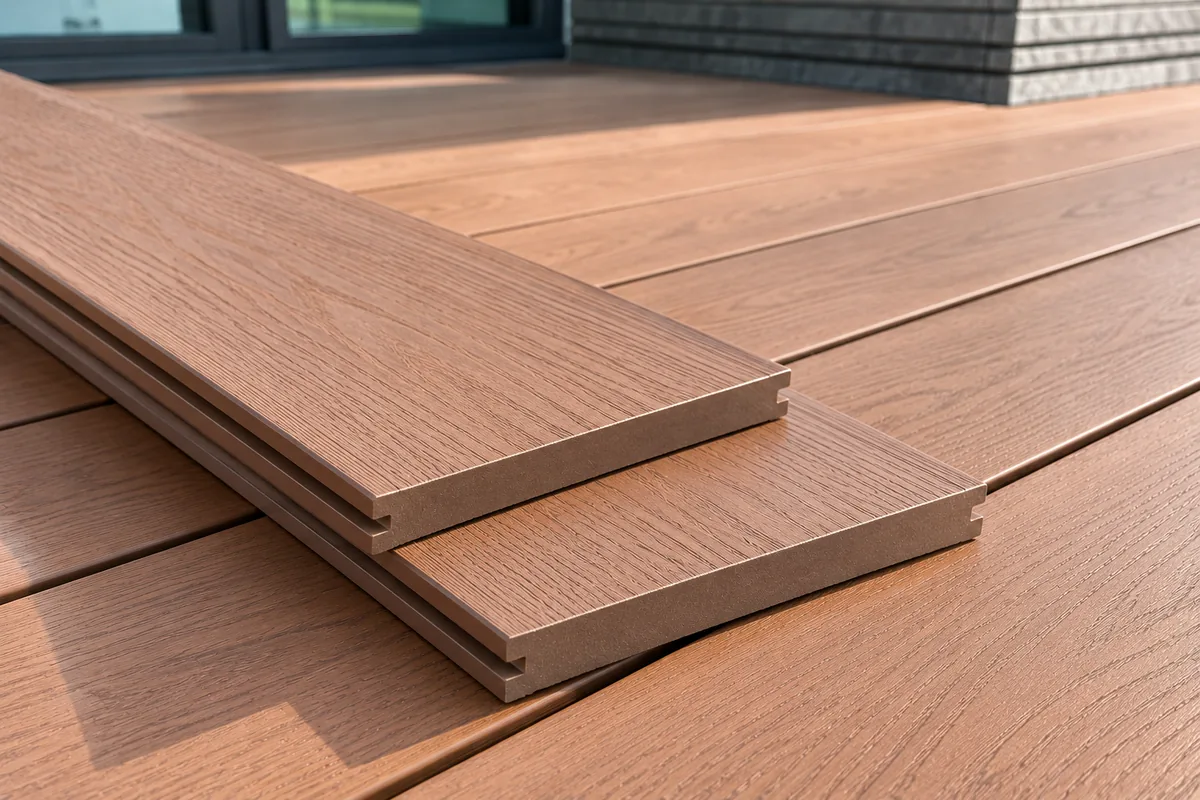
WPC stands for Wood Plastic Composite.
It is a composite decking material manufactured using wood-based fibres and polymers. The exact composition and construction vary between manufacturers and product ranges.
The objective is to provide the visual character of timber while reducing some of the maintenance requirements associated with natural wood.
Because of these characteristics, WPC is commonly considered for residential and commercial outdoor spaces.
Why Is WPC Decking Popular in Singapore?
Singapore’s climate creates several considerations for outdoor flooring.
Outdoor areas can experience prolonged sunlight, heavy rainfall and consistently high humidity throughout the year.
For homeowners, this means decking should be selected not only for appearance but also according to factors such as:
- exposure to sun and rain;
- drainage conditions;
- maintenance requirements;
- intended usage;
- existing floor conditions; and
- the decking’s supporting structure.
WPC decking can provide a practical balance between a timber-inspired appearance and relatively low routine maintenance.
However, performance varies between products, which is why homeowners should compare the actual specifications and warranty rather than assuming all WPC boards are identical.
Where Can WPC Decking Be Used?
One advantage of WPC decking is its versatility.
Balcony Decking
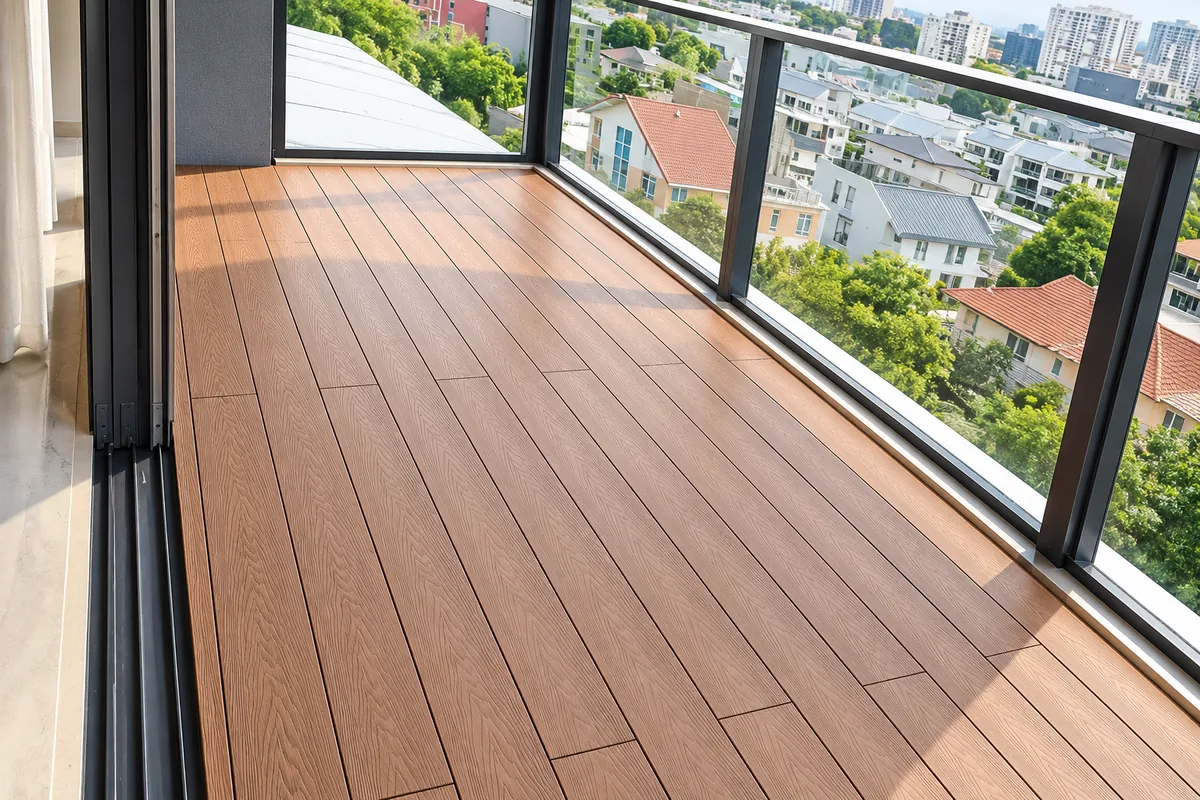
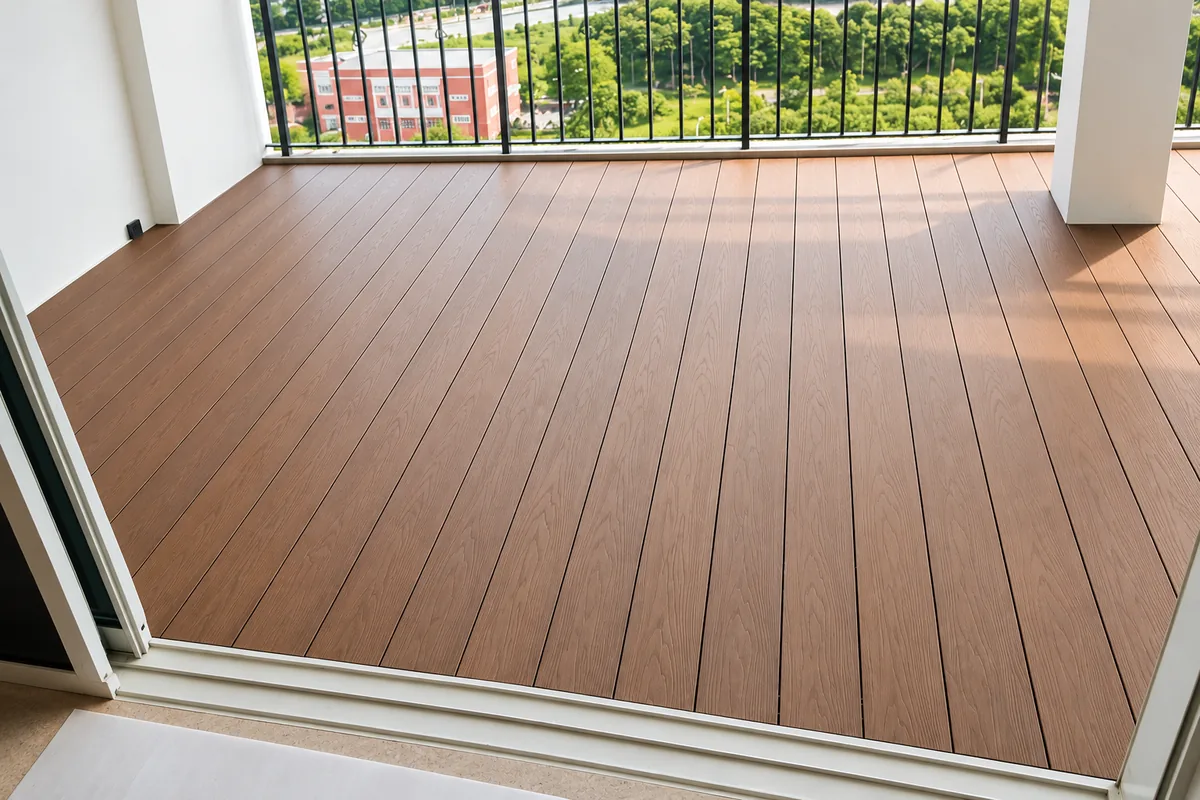
WPC is commonly considered for balcony decking in Singapore, particularly where homeowners want to make a tiled balcony feel more connected to their indoor living space.
Before installing decking on a balcony, the existing drainage points, floor level and door clearance should be assessed.
Decking should not be installed in a way that unnecessarily obstructs drainage or makes important areas difficult to access.
Patio Decking
For landed properties, WPC decking can be used to create an outdoor seating, dining or relaxation area.
The decking colour and board direction can also be coordinated with the property’s exterior design.
Garden Decking
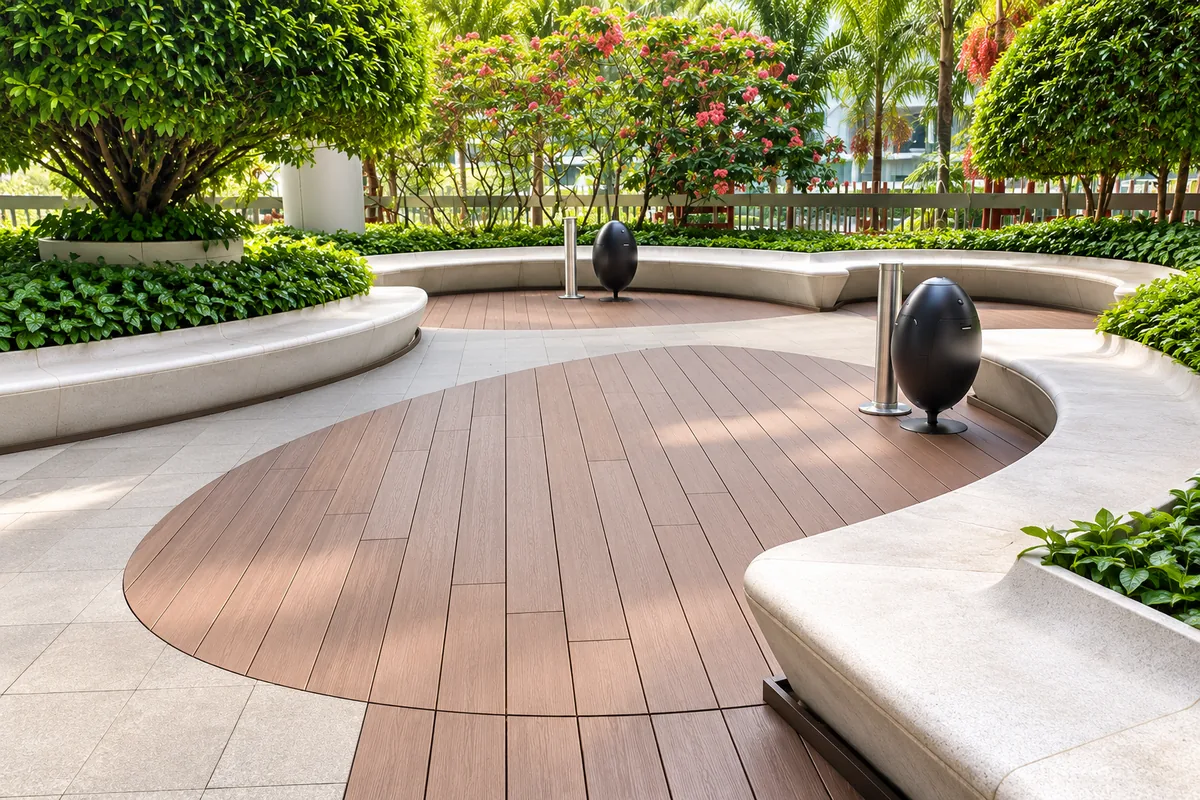
Decking can create a transition between landscaped areas and the house while providing a defined space for outdoor furniture and activities.
Garden installations may require additional consideration of the supporting structure and existing ground conditions.
Roof Terrace Decking
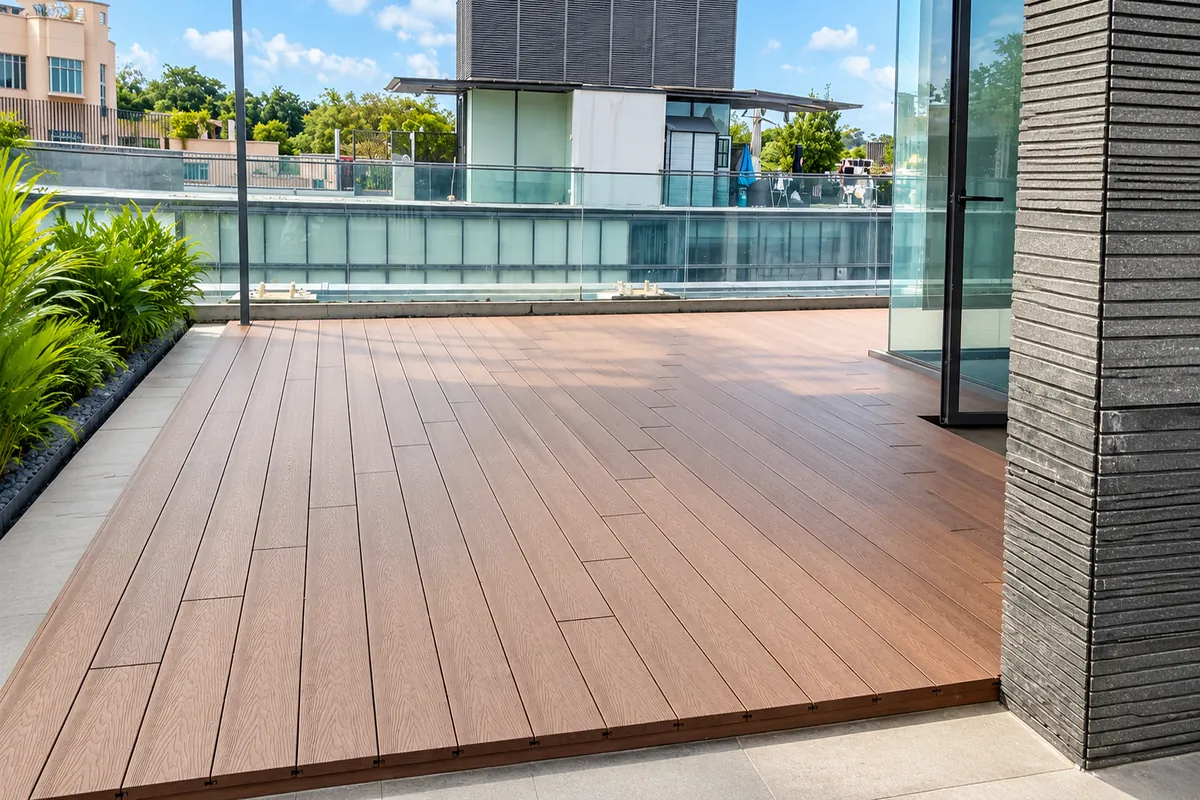
WPC or composite decking may also be considered for suitable roof terraces.
For these installations, particular attention should be paid to waterproofing, drainage, weather exposure, floor levels and the existing roof or terrace condition.
Commercial Outdoor Spaces
Depending on the product specification and intended usage, composite decking can also be considered for selected commercial outdoor areas.
The expected foot traffic and loading requirements should be assessed before material selection.
WPC Decking vs Natural Timber Decking
One of the most common questions homeowners ask is whether they should choose WPC or natural timber.
There isn’t one answer that suits every project.
| Consideration | WPC Decking | Natural Timber |
| Appearance | Consistent timber-inspired finish | Natural wood grain |
| Routine maintenance | Generally lower | Usually requires more regular upkeep |
| Colour consistency | Generally more uniform | Naturally varies |
| Sanding/oiling | Usually not routinely required | May be required depending on timber |
| Outdoor suitability | Depends on product specifications | Depends heavily on timber species and treatment |
| Natural material | Composite | Natural wood |
Homeowners who prioritise authentic natural wood may prefer timber.
Those looking for a timber-inspired appearance with less routine maintenance may prefer WPC.
The final decision should consider budget, appearance, maintenance expectations and site conditions rather than material name alone.
Is WPC the Same as Composite Decking?
The terms are often used interchangeably, but they are not necessarily identical.
Composite decking is the broader category.
WPC decking refers specifically to wood-plastic composite decking.
Different manufacturers may use different board constructions, compositions, surface treatments and protective layers.
Therefore, when comparing WPC decking products, ask about the actual board specification, warranty and installation system rather than simply comparing products labelled “composite.”
What Affects WPC Decking Prices in Singapore?
There isn’t one universal WPC decking price.
Current Singapore decking guides generally describe pricing as dependent on factors such as board type, project size, framing/substructure, site preparation, access and installation complexity.
Some of the main factors include:
Decking material and specification — Different WPC board profiles, construction and finishes have different costs.
Total decking area — Larger areas naturally require more decking material and labour.
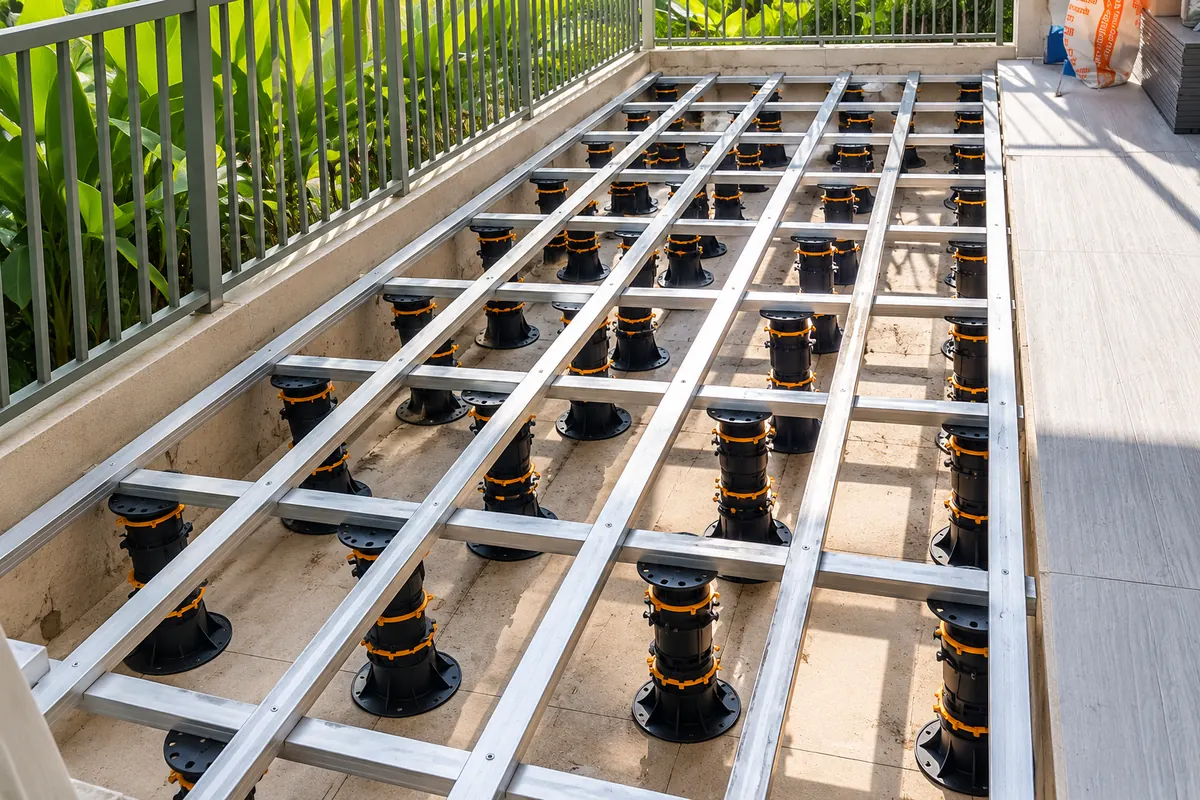
Substructure requirements — The supporting structure and levelling requirements can affect installation complexity.
Existing site condition — An uncomplicated balcony and a raised garden deck can require very different installation approaches.
Layout and finishing — Steps, corners, edge finishing and irregular layouts can affect material and labour requirements.
Site accessibility — Difficult access can also affect installation requirements.
For this reason, homeowners should compare the complete supply-and-installation scope, rather than looking only at the price of the decking board.
What Should You Check Before Installing WPC Decking?
Don’t choose WPC decking based solely on colour.
Before proceeding, consider:
- Drainage
Rainwater still needs an appropriate route to existing drainage points.
- Existing floor condition
The installer should understand what is underneath the proposed decking.
- Finished floor height
The completed decking height should be considered in relation to doors, thresholds and surrounding surfaces.
- Sun and rain exposure
Different outdoor locations experience different levels of direct exposure.
- Substructure
Ask what supports the decking boards and how the installation system works.
- Board specifications
Compare relevant product specifications rather than assuming every WPC board performs identically.
- Warranty
Understand what the product and workmanship warranties actually cover and their applicable conditions.
These considerations are especially important for balcony and roof terrace decking, where drainage and existing waterproofing should not be overlooked.
Professional WPC decking installation starts with understanding the existing site conditions, drainage requirements and suitable supporting structure for the outdoor space.
How Do You Maintain WPC Decking?
One of WPC decking’s attractions is its relatively straightforward routine maintenance.
General upkeep may include:
- sweeping away leaves and debris;
- cleaning dirt before it builds up;
- washing the surface according to the manufacturer’s recommendations;
- removing spills promptly; and
- periodically checking drainage areas.
Avoid assuming that “low maintenance” means no maintenance.
Always follow the cleaning and care recommendations for the specific decking product installed at your property.
Is WPC Decking Suitable for a Singapore Balcony?
It can be a suitable option for many balconies, subject to the individual property’s conditions.
Before installing decking for a balcony, consider the available height, drainage, existing flooring, exposure and any applicable property-management requirements.
For condominium properties in particular, homeowners should also check their MCST’s renovation requirements before starting work.
A proper site assessment helps determine whether WPC decking is appropriate and how it should be installed.
WPC Decking for Singapore Homes
WPC decking can be a practical choice for homeowners who want to improve their outdoor space while maintaining a timber-inspired appearance.
However, the quality of the final result depends on more than the decking board itself.
Material selection, substructure, drainage, site preparation and installation workmanship all matter.
Roofers provides WPC and outdoor decking installation in Singapore for balconies, patios, gardens, roof terraces and suitable residential or commercial outdoor spaces.
Our team can assess your outdoor area and recommend an appropriate decking solution based on the site conditions, design requirements and intended use.
Planning an Outdoor Decking Project?
Speak to Roofers for a site assessment and decking quotation.
Send us photos and approximate dimensions of your outdoor space to get started.
